

Streaks: How to Build Unbreakable Habits
A simple system to turn boring discipline into an addictive game you won't want to quit.

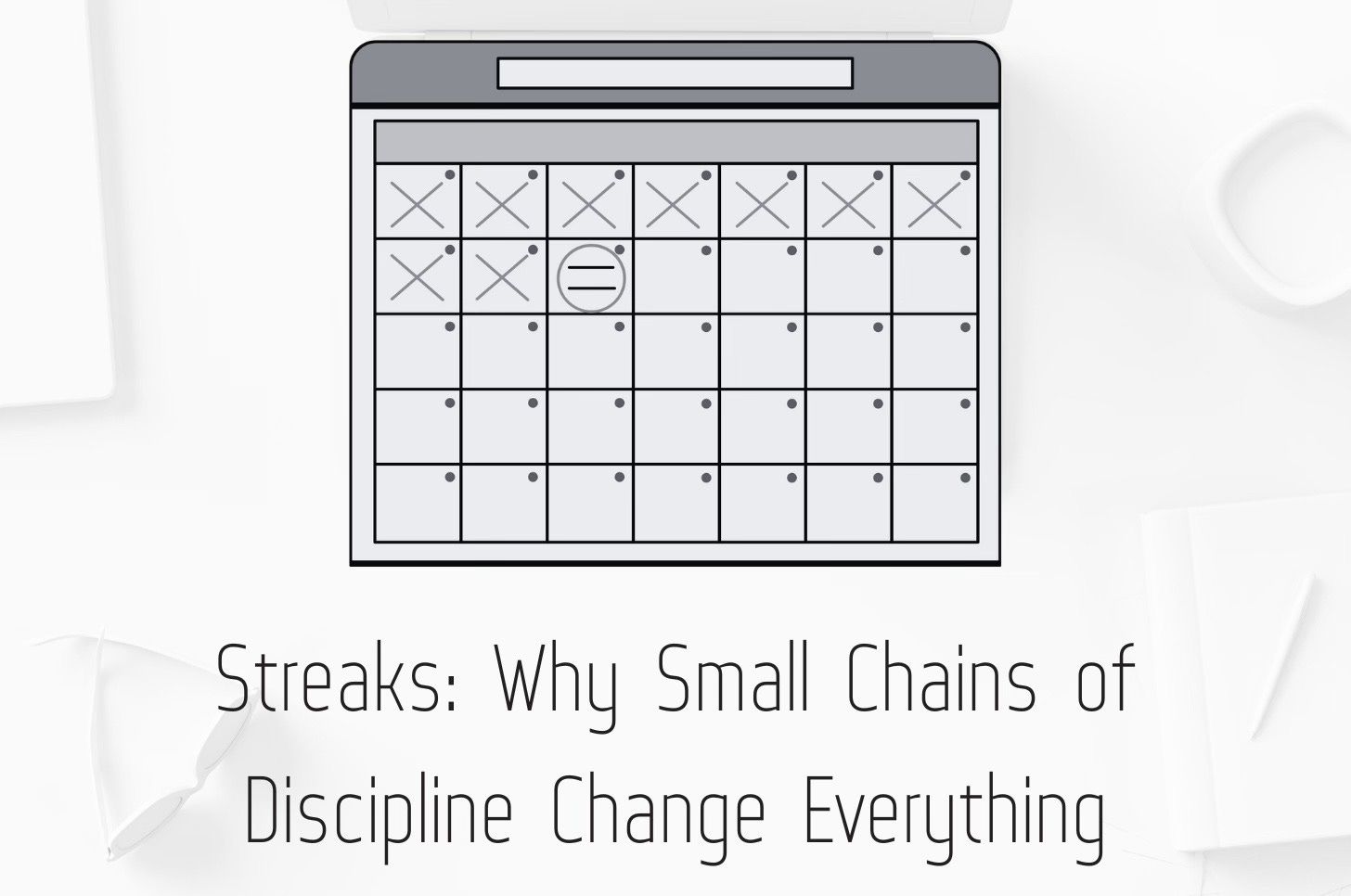
Motivation feels powerful in the moment, but it’s an unreliable foundation to live by.
It convinces you that you need to feel like doing the work, with the underlying dread that if you don’t, you’re going to fail - so you need to keep chasing motivation.
You don’t. What you need is to just do the work, again and again, until it becomes a part of you. Until you’re just the person that does that.
I spent years trying to motivate and inspire myself into action, only to fail as soon as I had an off day. Then, I started to just do the work when I needed to, regardless of how I felt, and as soon as I had done it enough times the new habit became a part of me.
These are streaks, a tool I’ve used for the past decade to do everything from losing weight and working out, to spending more time in deep work, or writing more.
Here’s why streaks work, and how you can start one.
Turning singular actions into unbreakable chains
A streak, or a habit chain, is an uninterupted string of small wins. Just like a link isn’t a chain, but put enough of them together and you have one, streaks turn you from wannabe to superstar.
Let me explain using a practical example: let’s say you want to meditate every day. You’ve had this on your radar for a while, but it was always something that future you could do.
So instead of hoping someday you’ll start meditating, you sit down today. It’s tough, you only manage a few minutes before you decide to quit, but you mark down a small win: day one, done.
Tomorrow you get back to it, and while you feel the itch to get up after the same amount of time, you hang on for a full 5 minutes. Day two, done.
Over the next few days you force yourself to sit down and meditate - sometimes you use a guided meditation app, others you just sit down and stare at a wall. It’s both difficult, and easier every day, and the satisfaction you get from ticking another day off in your planner makes it worth it.
Soon, when you go to mark another day in the calendar you notice you’ve been meditating for a full, uninterupted month. So you keep going.
Now, you’re just someone who meditates, and even if sometimes you’d like to quit you feel the pull of the uninterupted string of progress spurring you on.
And that’s how you have your first streak.
Why streaks work
Streaks succeed where motivation fails for three psychological reasons:
They eliminate decision fatigue. Every decision we make depletes our mental energy, and the decision of “should I do this today?“ is one of the most draining. There’s no decision to make in keeping a streak, you do it because the chain demands it. The longer the chain, the less you have to think about whether to continue.
They leverage loss aversion. Behavioral economics has shown that humans hate losses roughly twice as much as they lovegains. Once you’ve built a 47-day streak, breaking it doesn’t just mean missing one day, it means losing 47 days of work. That number has an invisible currency attached to it that you see value in, and the pain of breaking the chain becomes greater than the pain of doing the habit.
They provide immediate feedback. When you track your streak (whether in an app, on a calendar, or in a notebook), you get instant evidence of progress. That growing number releases dopamine and reinforces the behavior loop: cue → action → reward → repeat. You’re not waiting for some distant transformation; you’re celebrating a small win today.
Streaks are tested
Jerry Seinfeld famously used what he called “Don’t Break the Chain“ to force himself to write jokes every day. He’d mark a big red X on a wall calendar for each day he wrote, and his only job was to not break the chain. That daily discipline built one of the most successful comedy careers in history.
Author and entrepreneur Seth Godin has published a blog post every single day since the early 2000s, doing it for over over 8,000 consecutive days. He’s said the streak itself is what keeps him writing, not waiting for inspiration to strike.
One of the most prolific authors of our time, Stephen King famously writes 2,000 words per day, every day. In his book “On Writing” King says: Your job is to make sure the muse knows where you’re going to be every day from nine ’til noon. Or seven ’til three. If he does know, I assure you that sooner or later he’ll start showing up.
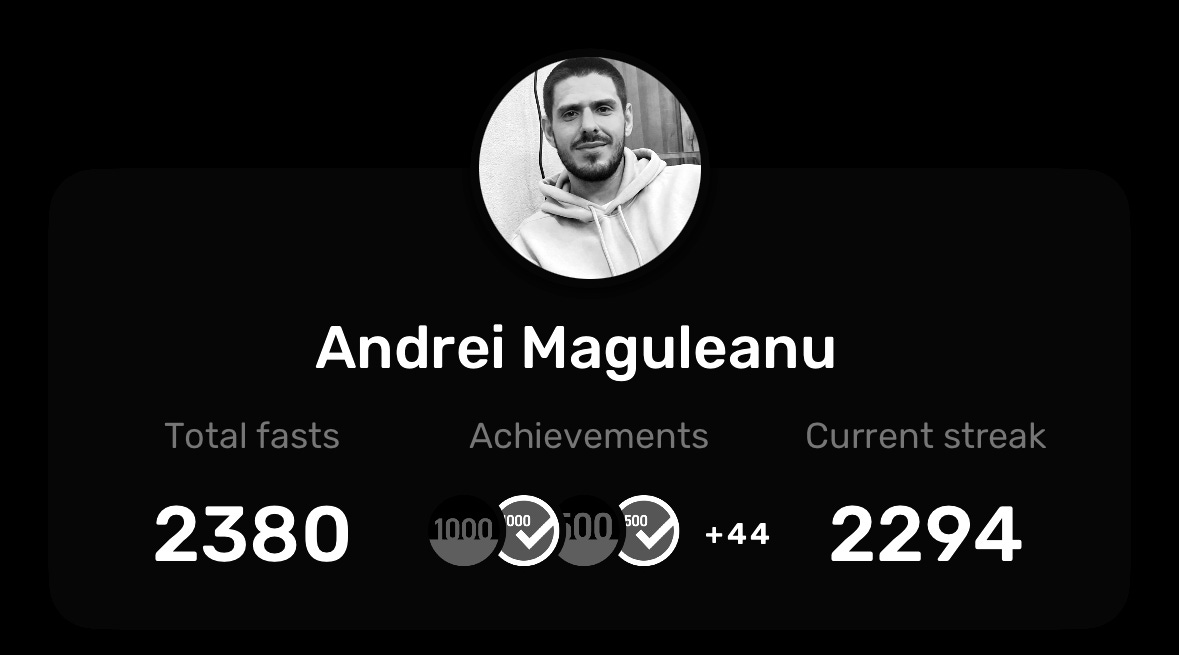
The streak that taught me the power of stringing together good habits is intermittent fasting. After years of trying to lose weight and failing, I eventually found a simple solution: stop eating for a chunk of the day. This simple habit change, done repeatedly, has changed my approach to food, health, and life in general. As I’m writing this, I’m on day 2,294, and weight hasn’t been an issue for me in years.
Day 1: Start a chain today
What have you been putting off?
Throughout reading this, your thoughts have gone to something you’ve been meaning to start, haven’t they?
Choose that one thing - one, not five - and do it to the best of your ability today. Do it again tomorrow, and the day after that.
It’s okay to suck at it, what matters is that you do it and mark off each successful instance in your calendar or your notes.
Then don’t break the chain.
Great article, Andrei! I experienced the power of streaks my self and can vouch for the approach.
During Covid lockdown I started doing daily pull-ups and grew to 100+ days chain. When I discovered that sometimes life gets in the way… I caught the COVID. I obviously fell out of my streak.. and felt almost zero motivation to get back to exercising when I recovered from sickness 5 days later.
If you have any tips on what mechanics can pull you back, once you break your streak, that would be next level cherry on top.
Cheers,
Sergey.